
How Are Manufacturers Fitting 8,000 mAh Batteries Into 7mm-Thin Smartphones?
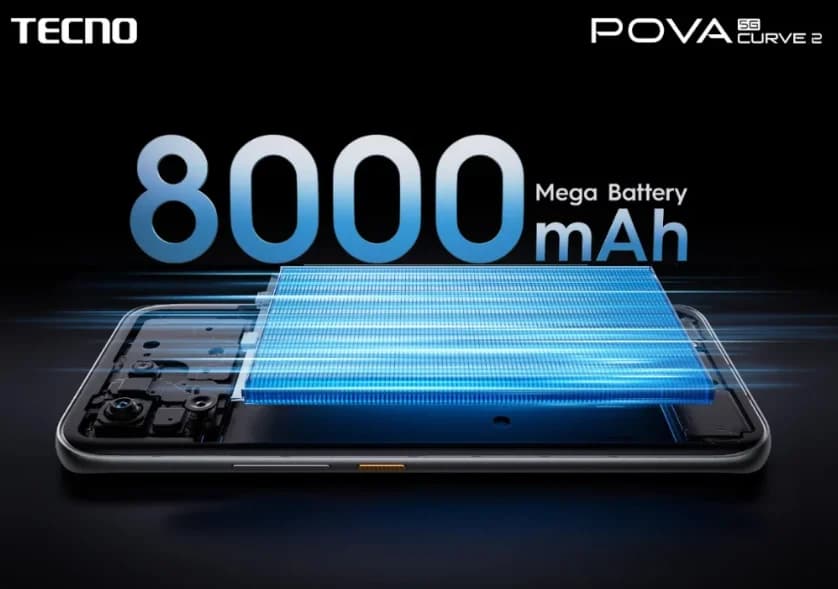
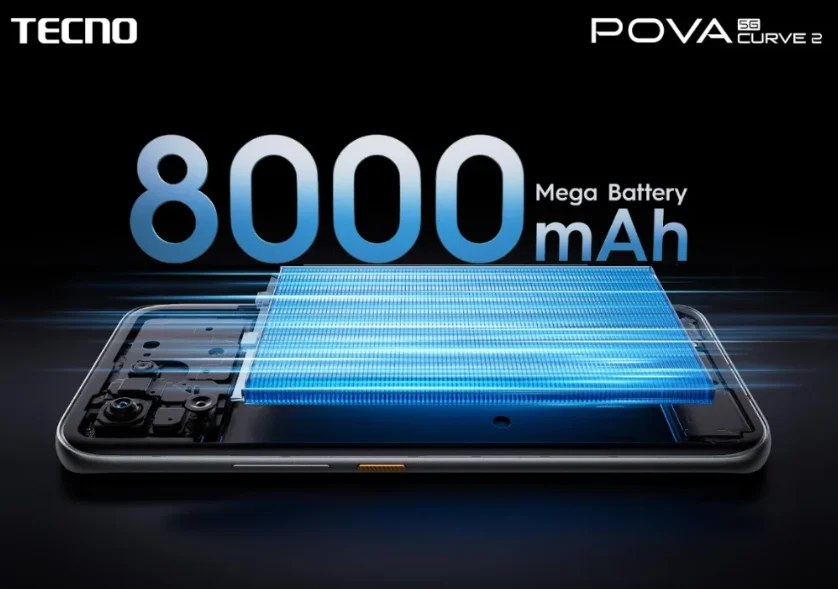
In the past, a phone with a 5,000 mAh battery would be bulky and hard to hold. But in 2026, phones like the Tecno Pova Curve 2 can fit an 8,000 mAh battery into a body just 7mm thin.
In the past, a phone with a 5,000 mAh battery would be bulky and hard to hold. But in 2026, phones like the Tecno Pova Curve 2 can fit an 8,000 mAh battery into a body just 7mm thin. This is made possible by new battery chemistry innovations from Chinese smartphone manufacturers. Here are the key advancements that make it possible.
1. Switching from Graphite to Silicon-Carbon (Si-C) Anodes
Conventional smartphone batteries use graphite anodes, which are stable and safe but have limited energy density. Silicon can store 10 times more energy than graphite, but it swells by up to 300% during charging. To solve this, companies developed Silicon-Carbon (Si-C) technology, blending silicon with carbon so the carbon matrix prevents the silicon from expanding — allowing more energy to fit in less space.
2. Controlling Battery Swelling
To manage the expansion caused by silicon, manufacturers convert silicon into nano-sized particles, embed them in carbon layers, and blend them with graphite. These incremental refinements are what have made 7,000 mAh and 8,000 mAh batteries possible in bodies under 8mm thick.
3. Gradual Technology Progression
This didn't happen overnight. Starting around 2023, companies began testing with 5% to 10% silicon content. By 2024 and 2025, the technology became more widespread among Chinese manufacturers, progressively pushing past 5,000 mAh and 6,000 mAh thresholds.
4. Competition From Other Brands
Tecno isn't alone. Other phones now include the Honor Power (8,000 mAh in under 8mm), iQOO Z11 Turbo (7,600 mAh at 8.1mm), and Honor Magic V5 (6,000 mAh in a foldable body). Higher energy density is the key to producing these phones without bulk.
5. Why Are Apple and Samsung Behind?
Both companies prioritize long-term battery durability and safety, so they haven't rushed to adopt the new technology. Strict international shipping regulations for high-capacity batteries are also a factor. They may adopt it later, but they won't be the ones leading.
6. Future Outlook
If this technology continues to advance, 10,000 mAh phones will become more common — and indeed, Honor and Realme have already launched such devices. However, questions remain about long-term durability, thermal management during fast charging, and cost.
Ref: Gizmochina