
Edison-Inspired Battery Charges in Seconds and Endures 12,000 Cycles for Decades
A UCLA-led international research team has developed a nickel-iron battery prototype that charges in seconds and can withstand over 12,000 charge cycles — equivalent to more than 30 years of daily use.
A UCLA-led international research team has developed a nickel-iron battery prototype that charges in seconds and can withstand over 12,000 charge cycles — equivalent to more than 30 years of daily charging.
The technology's fast charging and strong energy output make it particularly well-suited for storing surplus electricity generated by solar plants during the day for use at night, or as backup power for data centers. However, researchers note it does not yet match the energy density of lithium-ion batteries.
The battery uses nickel and iron nanoparticles smaller than 5 nanometers — with 10,000 to 20,000 fitting within the width of a single human hair. This tiny scale dramatically increases the electrode's surface area, allowing nearly every atom to participate in the chemical reaction. As a result, what once took seven hours to charge can now be done in seconds.
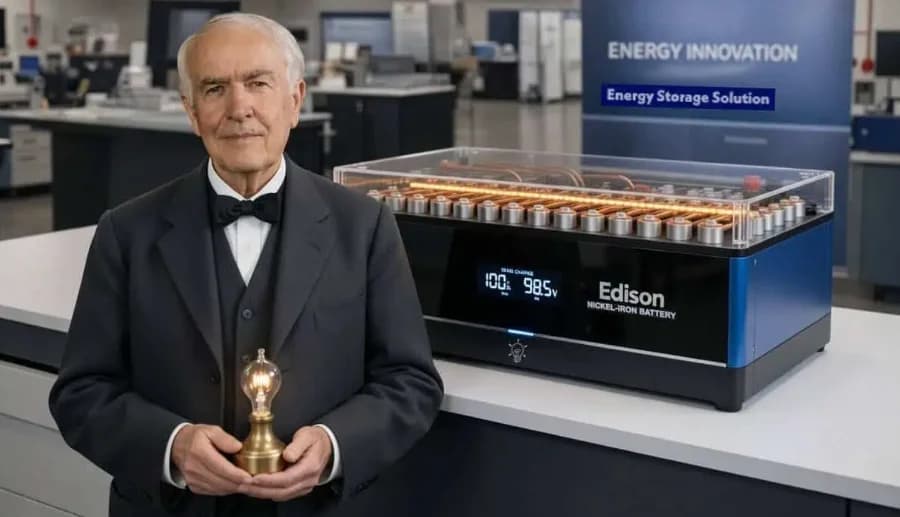
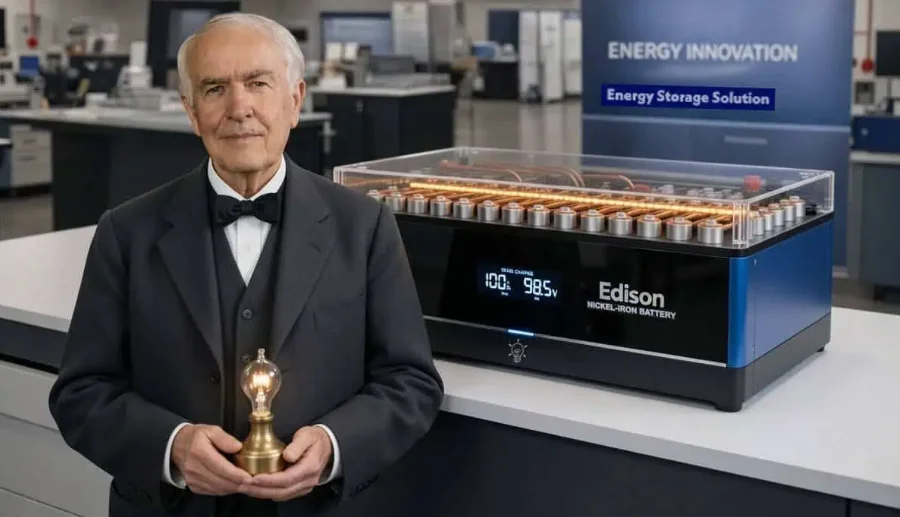
Inspired by Thomas Edison's original nickel-iron battery design from the early 1900s, this modern version uses advanced nanoscale engineering to overcome the original's slow charging limitation, opening new possibilities for grid-scale energy storage.