
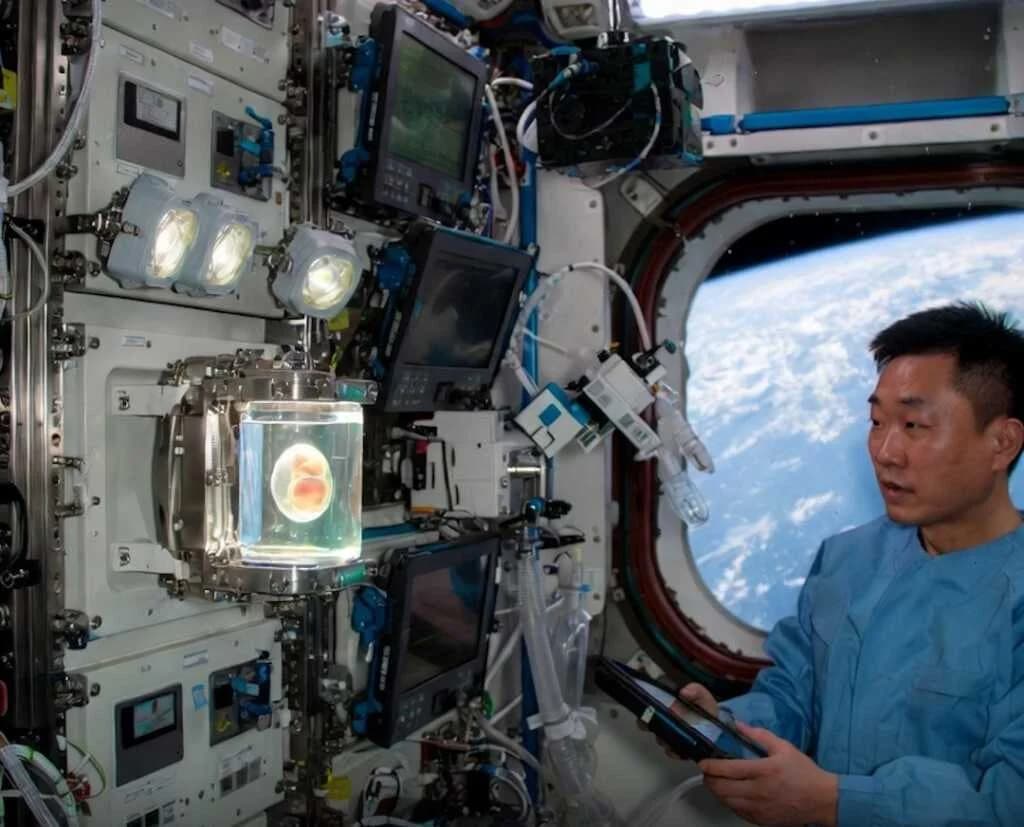
In the future, when humans expand their territory into space and begin to live there, scientists want to understand how reproduction processes might be affected. To investigate this scientifically, China has conducted a unique experiment by sending artificial human embryo models to their Tiangong space station.
However, there is no need to worry. These are not actual embryos created by combining a father's sperm and a mother's egg. Instead, they are stem cell-based models that mimic early embryonic development, so they do not have the capability to develop into a living human child.
These embryo models were transported into space aboard the Tianzhou-10 cargo spacecraft. The primary objective of scientists is to study how the microgravity environment in space and cosmic radiation affect the early cell organization processes of living organisms.
In particular, researchers are closely observing how the implantation process—when the embryo attaches to the uterine wall—and gastrulation—the process where cells organize into layers—change in space. These are crucial processes for the formation of the body's basic structure.
The models remained in space for approximately 5 days, during which robotic systems automatically performed feeding operations. Subsequently, the cells were frozen and sent back to laboratories on Earth for detailed research analysis.
According to some reports, in addition to these human cell models, embryonic samples of fish and mice were also included in the experiment. In essence, China is conducting a preliminary step to understand how early human embryonic development processes would occur in space, but this is not an actual experiment to create real humans.
Ref: Technology Innovation